Why Does Silence Removal Sound Choppy?
Choppy silence removal often means your threshold is too high or pauses are trimmed too short. Learn settings to tighten dead air without clipping speech.
Read article→Pause removal
Upload spoken recordings, detect long pauses and dead air, trim awkward gaps, and export audio that moves faster for listeners.
MP3, WAV, M4A and most browser-supported audio/video files.
Everything you need to turn spoken recordings into publish-ready audio from one browser workspace.

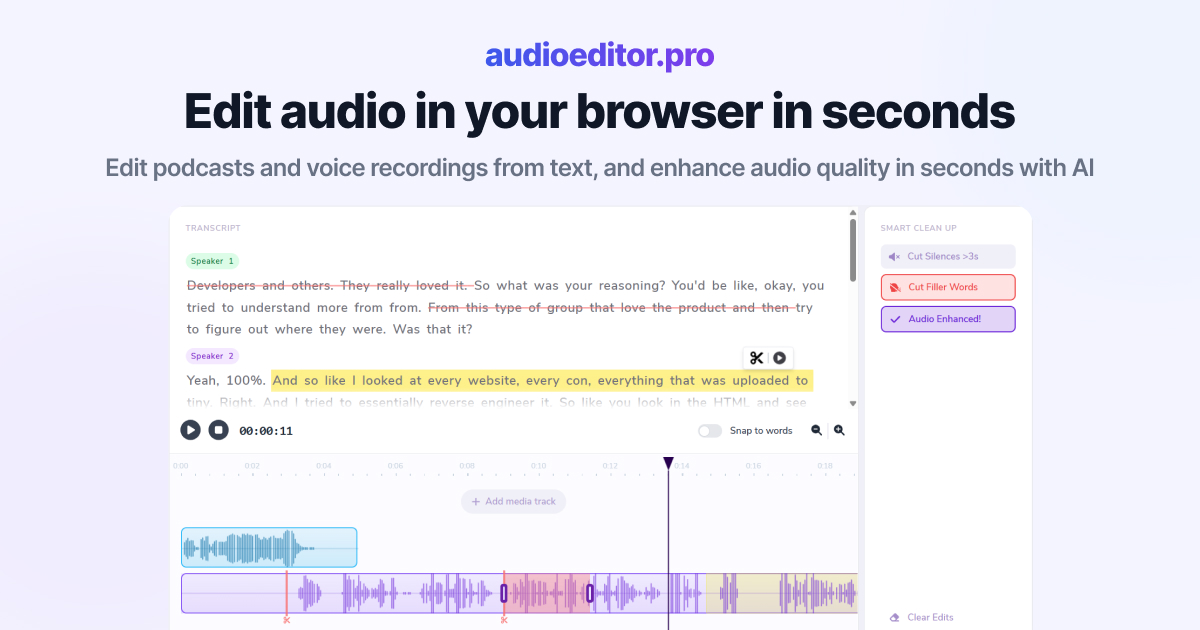
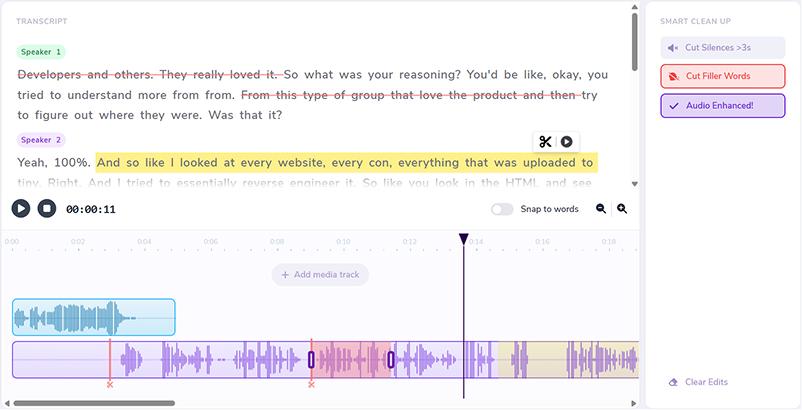
Select words in the transcript to cut, move, or refine the underlying audio.
Improve clarity and reduce noise without leaving the editor.
Remove dead air automatically so interviews and episodes stay tight.
Clean up ums, uhs, and hesitations in bulk from the transcript view.
Layer music, intros, and voiceovers on the same timeline.
Switch to waveforms whenever you need frame-accurate control.
Long thinking pauses, dead air between topics, and slow intros — remove pauses from podcasts and voice tracks without manual waveform hunting.
Remove long pauses between segments so episodes feel more dynamic for listeners.
Trim pauses between questions and answers while keeping dialogue natural.
Remove pauses from voiceover and course audio without re-recording lines.
Open the editor in any browser tab and upload your recording.
Detect long gaps in bulk, then refine individual pauses on the timeline.
Pair pause removal with filler cleanup and voice enhancement.
Download faster-flowing audio from the same workspace.
Drop spoken audio into the editor. Transcription helps you see where pauses fall in context.
Run automatic silence and pause detection, or trim gaps directly on the timeline.
Review cuts in the transcript, remove filler words if needed, and enhance voice clarity.
Download when pacing sounds right. To cut spoken mistakes, try remove mistakes from audio recording on the same platform.
Practical guides on transcript editing, cleanup workflows, and spoken-audio production.
Choppy silence removal often means your threshold is too high or pauses are trimmed too short. Learn settings to tighten dead air without clipping speech.
Read article→Heavy filler removal can sound robotic when pauses vanish and words land too close. Learn when to cut ums and when to leave speech human.
Read article→Remove ums and uhs automatically from podcast audio with transcription, bulk filler detection, and a quick review pass so cuts stay natural.
Read article→Both target dead air. Pause removal often focuses on awkward gaps between phrases and topics in spoken recordings.
Yes. Run bulk detection, review results, and fine-tune on the timeline before export.
Timeline trimming works on waveforms. Transcription adds context for spoken edits.
Yes. Tighter pause pacing is a common podcast cleanup step.
Yes. Use both tools in the same browser editor.
MP3, WAV, M4A, and most browser-supported audio and video formats are supported for upload.