Filler words
Does Removing Filler Words Sound Robotic?
Heavy filler removal can sound robotic when pauses vanish and words land too close. Learn when to cut ums and when to leave speech human.
TL;DR
- Over-removal sounds robotic when pauses and breath tails disappear, not when you cut some ums.
- Remove clustered fillers; keep isolated hesitations that carry rhythm or emphasis.
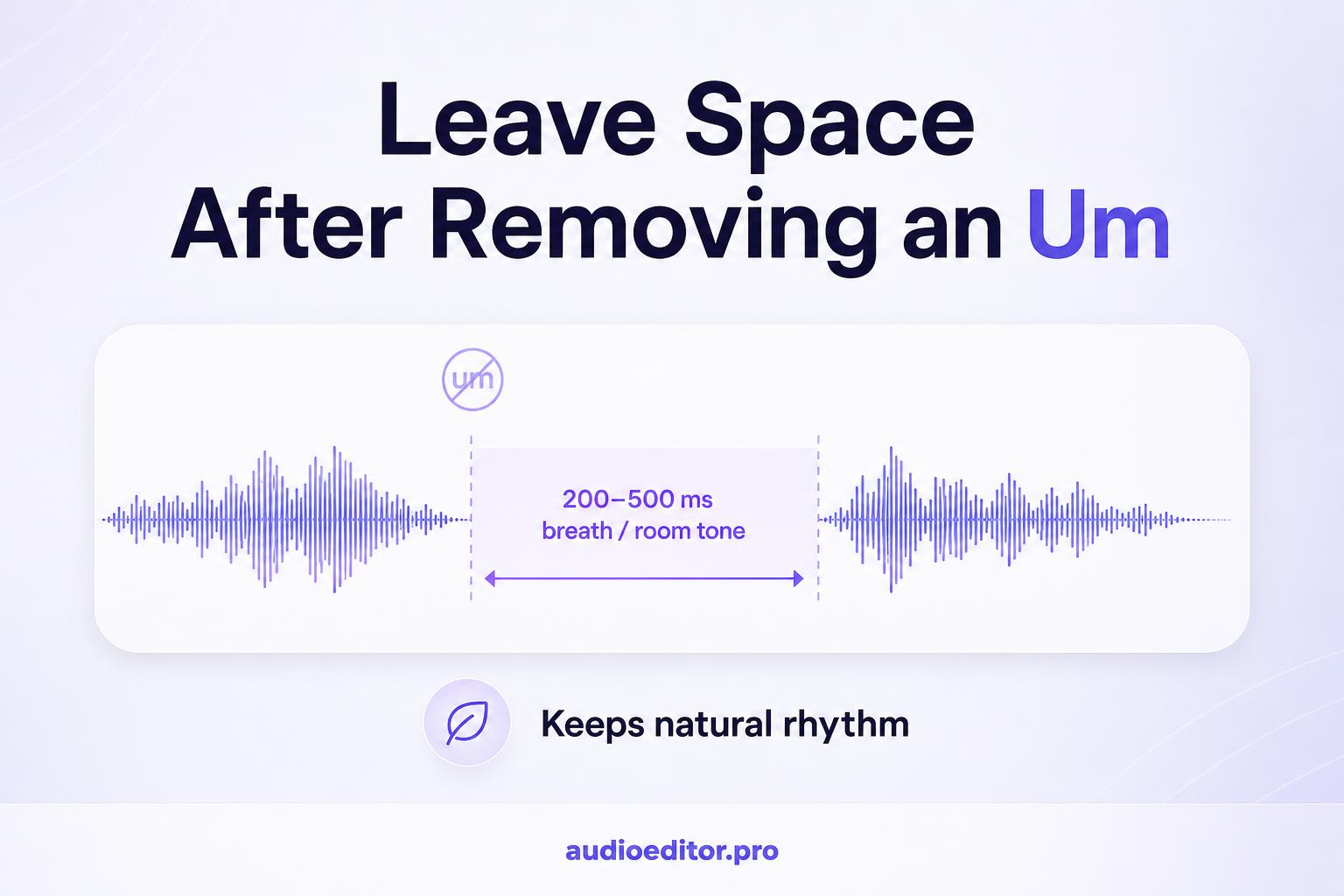
- Leave 200–500 ms room tone after cutting a standalone um when needed.
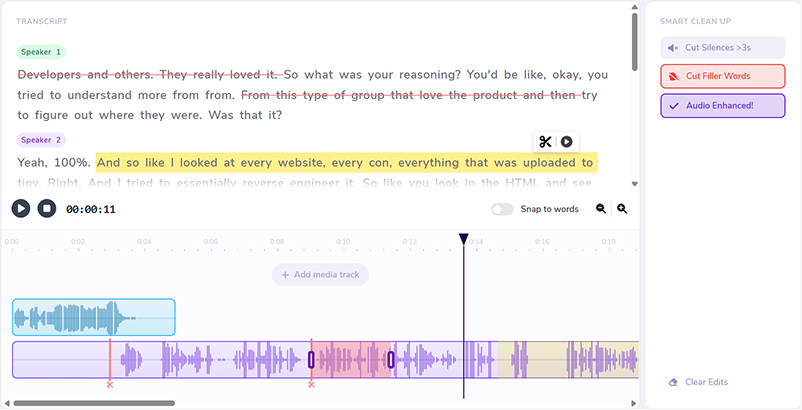
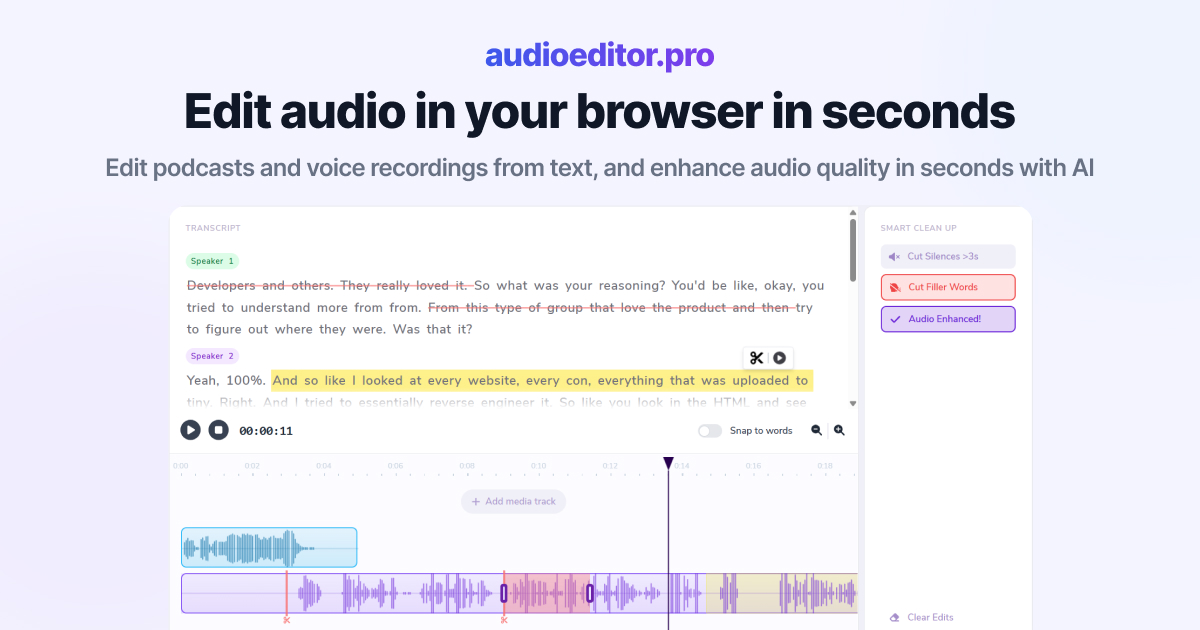
- audioeditor.pro lets you review filler flags in context before export.
Yes, it can. Not because filler removal is bad, but because over-removal strips the rhythm listeners expect from real conversation.
A few ums left in place sound human. Zero ums, zero pauses, and words packed tight sound like someone reading a press release at double speed. The fix is not to avoid cleanup. It is to remove what distracts and keep what carries personality.
Why listeners notice "too clean" speech
Spoken language has a pulse: micro-pauses, breaths, small hesitations while someone thinks. Filler words are one part of that pulse. When you delete every um and uh and also shorten every pause, the brain still expects breathing room. Without it, speech feels compressed.
Listeners rarely think "they removed fillers." They think:
- "This sounds edited"
- "Why is she talking so fast?"
- "Something feels off but I cannot name it"
That is the robotic effect: correct words, wrong rhythm.
When filler removal crosses the line
Removal tends to sound robotic when several of these happen at once:
| Symptom | What usually caused it |
|---|---|
| Words run together | Cuts with no breath tail between them |
| Flat energy | Every hesitation gone, including thoughtful pauses |
| Choppy mid-sentence | Filler removed inside a phrase that needed it for meaning |
| Uneven pacing | Dense clusters of cuts next to untouched rambling |
| Thin breath sounds | Half-breaths left after um deletion |
Automatic tools make the first pass fast. They do not know which um was emphasis and which um was clutter. That judgment is yours.
If you already ran automatic um and uh removal, treat the export as a draft, not a final mix.
What to remove vs what to keep
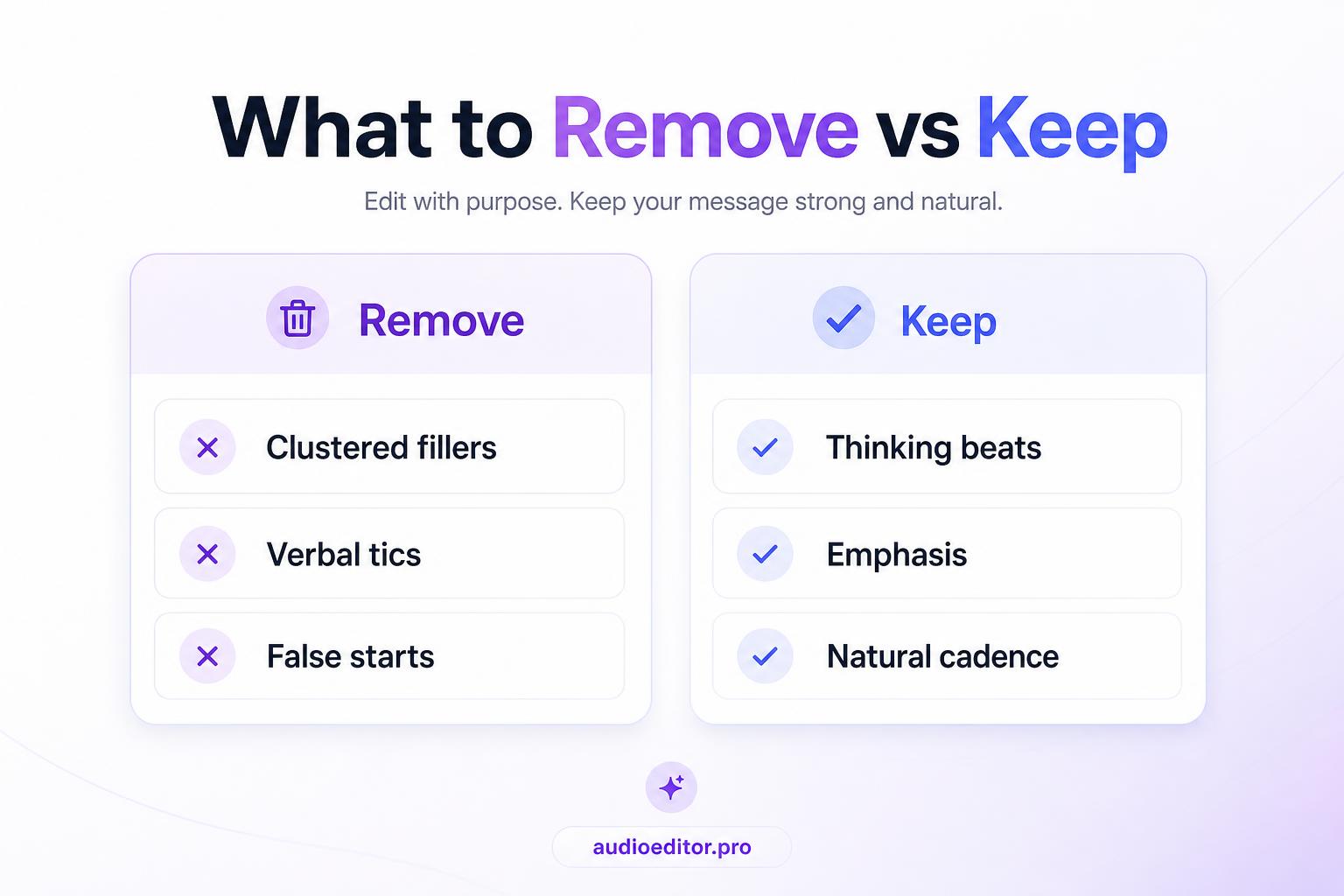
Remove when fillers:
- Cluster in a tight run ("um, uh, like, you know" in five seconds)
- Repeat as a verbal tic every few sentences
- Hide a false start you already plan to cut
- Break flow in an otherwise tight answer
Keep when fillers:
- Mark a genuine thinking beat before a hard question
- Carry emphasis ("like, really?")
- Hold the speaker's natural cadence in a casual show
- Sit too close to another word to cut without a jump cut
A practical ratio many podcast editors use: remove roughly 60 to 80% of obvious ums in a heavy episode, not 100%. The host should still sound like themselves.
How much pause to leave after a cut
Filler words often sit where a breath would be. Delete the um and nothing replaces it, and two words collide.
After removing a standalone um or uh, aim for 200 to 500 ms of room tone or breath before the next word starts. Shorter can work in fast dialogue; longer helps thoughtful interview answers.
If the gap hits zero, add a sliver of room tone from elsewhere in the take or undo one removal in that sentence.
This is the same idea as leaving breath tails when you avoid jump cuts. Rhythm beats perfection.
Review passes that protect natural sound
Use three listens after bulk filler cleanup:
1. Phrase listen — play five seconds around each dense cut block. Restore any removal that sounds clipped.
2. Pace listen — play one full minute at 1x without stopping. If you feel rushed, you removed too much.
3. Stranger listen — ask someone unfamiliar with the raw tape if the speaker sounds like themselves. Fresh ears catch robotic pacing faster than yours after an edit session.
Undo individual cuts in the transcript rather than re-running the whole automated pass. On audioeditor.pro, you can restore individual filler flags without reprocessing the entire file. Surgical restores sound more natural than a second bulk delete.
Format changes how aggressive you can be
Not every show needs the same cleanup level.
Tighter polish — tutorials, ads, short explainers, corporate narration. Higher filler removal is fine if pacing stays even.
Conversational — long interviews, comedy, storytelling. Keep more fillers and pauses. Personality is the product.
Panel or crosstalk — cut only fillers that fight overlap; leave room for natural turn-taking.
Match cleanup to listener expectation. A polished business show can tolerate more removal than a loose two-hour chat.
Signs your edit still sounds human
Before publish, check these:
- You can still hear occasional breaths between phrases
- No sentence sounds like two takes slammed together
- Energy rises and falls across the episode, not one flat line
- The host's verbal habits remain (one kept "you know" is fine)
- Joins are free of clicks and pops from harsh cuts
If three or more sound wrong, pull back removals in the worst minute and re-export.
The short answer
Removing filler words does not have to sound robotic. Removing every filler word, every pause, and every breath usually does.
Use automation to find candidates. Use your ears to decide what stays. Leave space for speech to breathe, and the episode will sound edited for clarity, not stripped of humanity.
FAQ
Does removing all filler words always sound robotic?
Not always, but removing every filler plus every pause and breath usually does. Aim for clarity, not zero disfluency.
What percentage of ums should I remove?
Many podcast editors remove roughly 60 to 80% of obvious ums in a heavy episode, not 100%. The host should still sound like themselves.
How much pause should I leave after cutting an um?
About 200 to 500 ms of room tone or breath before the next word when a standalone um was removed.
Which show formats tolerate more cleanup?
Tutorials, ads, and narration can be tighter. Long interviews, comedy, and storytelling need more kept fillers and pauses.
How do I catch robotic pacing before publish?
Do a phrase listen on dense cut blocks, a one-minute pace listen at 1x, and optionally a stranger listen on fresh ears.