Why Does Silence Removal Sound Choppy?
Choppy silence removal often means your threshold is too high or pauses are trimmed too short. Learn settings to tighten dead air without clipping speech.
Read article→For lectures
Upload lecture audio, edit by transcript, remove long pauses and fillers, enhance instructor voice, and export polished academic content from your browser.
MP3, WAV, M4A and most browser-supported audio/video files.
Everything you need to turn spoken recordings into publish-ready audio from one browser workspace.

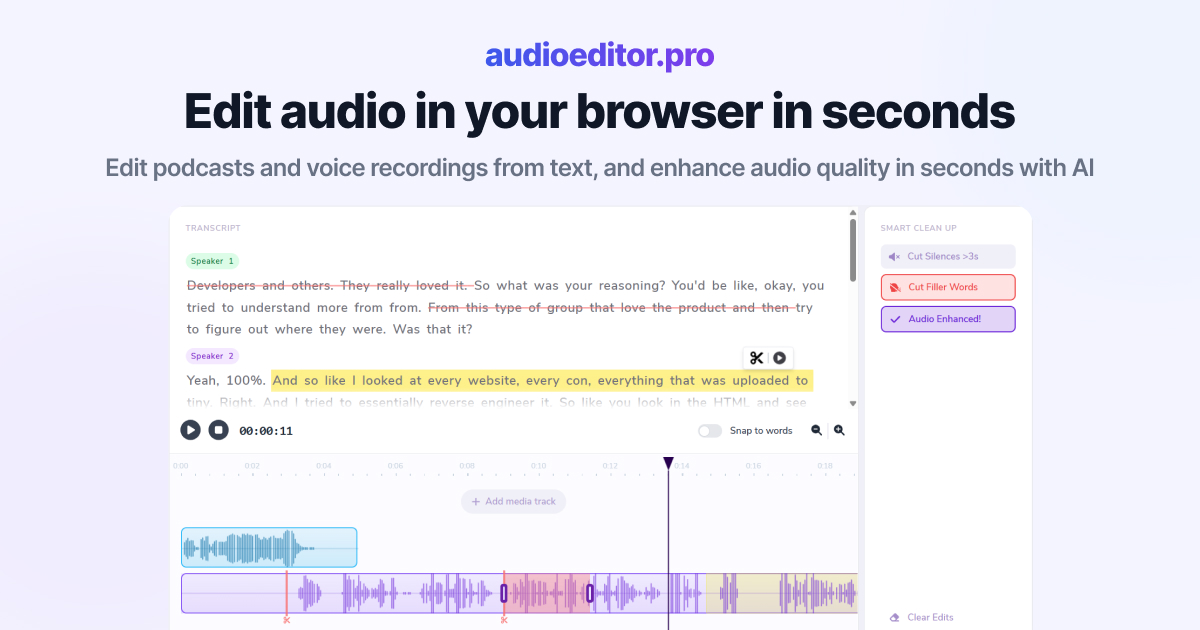
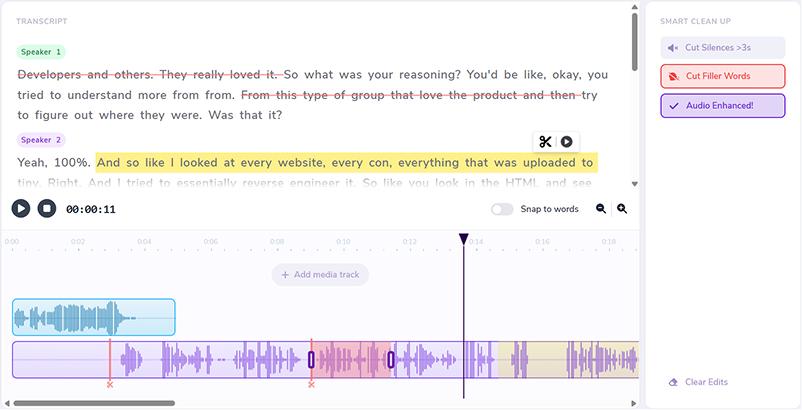
Select words in the transcript to cut, move, or refine the underlying audio.
Improve clarity and reduce noise without leaving the editor.
Remove dead air automatically so interviews and episodes stay tight.
Clean up ums, uhs, and hesitations in bulk from the transcript view.
Layer music, intros, and voiceovers on the same timeline.
Switch to waveforms whenever you need frame-accurate control.
Classroom recordings, recorded talks, and distance-learning audio — edit long spoken lectures faster with transcript tools.
Cut sections by transcript and remove pauses so lectures stay engaging for students.
Remove fillers and mistakes from instructor audio without re-recording full sessions.
Polish spoken lecture content for online student access with cleanup and enhancement.
Extract and polish dialogue tracks from recorded talks and screen captures.
Structure lectures with transcript cuts and refine timing on the timeline.
Remove silences, filler words, and noisy sections from academic audio.
Download lecture audio from the same workspace where you edited it.
Drop lecture audio or video into the editor. Transcription starts when speech is detected.
Cut sections, remove digressions, and tighten pacing by editing the lecture transcript.
Remove silences and filler words, enhance instructor voice, and layer intro audio if needed.
Download when the academic audio sounds ready. For show-style spoken content, see our audio editor for podcasters on the same platform.
Practical guides on transcript editing, cleanup workflows, and spoken-audio production.
Choppy silence removal often means your threshold is too high or pauses are trimmed too short. Learn settings to tighten dead air without clipping speech.
Read article→Heavy filler removal can sound robotic when pauses vanish and words land too close. Learn when to cut ums and when to leave speech human.
Read article→Remove ums and uhs automatically from podcast audio with transcription, bulk filler detection, and a quick review pass so cuts stay natural.
Read article→Yes. The workflow targets instructor speech, long recordings, cleanup, and export for education.
Yes. Upload lecture-length audio, edit by transcript, run cleanup, and export.
Yes. Enhancement and noise reduction help lecture audio sound clearer for students.
Yes. Smart cleanup tools help tighten academic spoken content.
No. Transcript editing makes lecture cleanup more approachable in the browser.
MP3, WAV, M4A, and most browser-supported audio and video formats are supported for upload.